
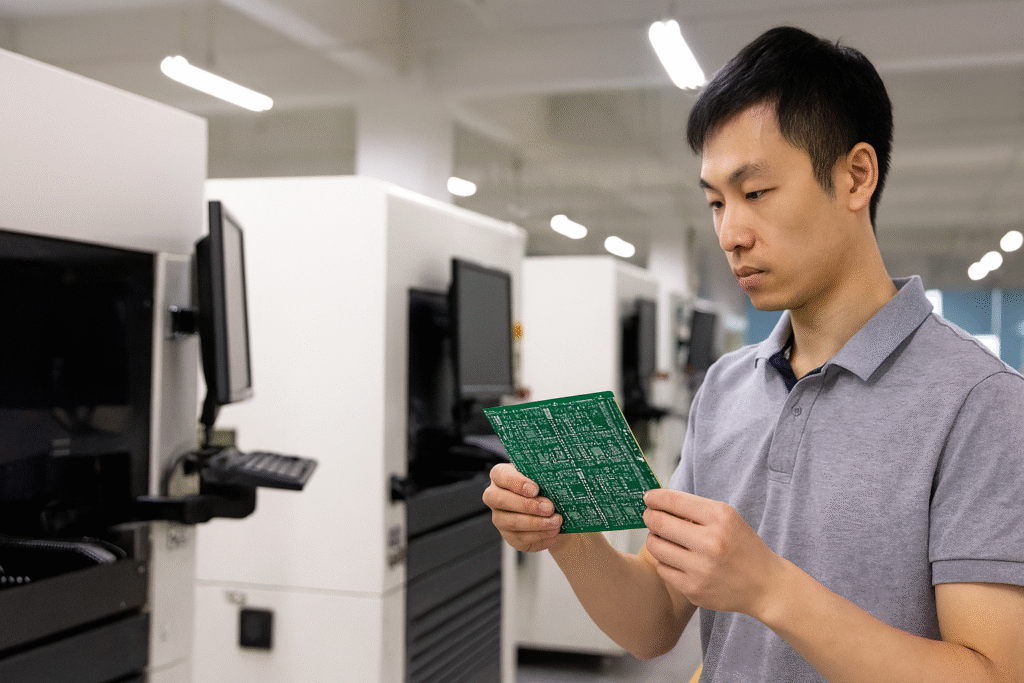
Finding reliable rapid prototyping companies in Shenzhen can make the difference between concept and market success for hardware startups. Shenzhen’s ecosystem connects innovators with OEM manufacturers, custom prototyping labs, and electronics suppliers that turn ideas into reality faster than anywhere else.
Why Shenzhen is the Global Hub for Startups
Once a fishing village, Shenzhen has evolved into a manufacturing powerhouse of over 12 million people producing a major share of the world’s electronics. Harvard Business Review calls this phenomenon “manufacturing compression” — where every stage of production, from design to assembly, happens within a single industrial ecosystem. In districts like Huaqiangbei, Bao’an, and Nanshan, you’ll find everything from PCB suppliers and sensor manufacturers to mold fabricators and R&D labs — all within a 50-mile radius. The result: prototyping cycles that take months elsewhere can be completed in weeks, sometimes days, giving startups a vital speed advantage. For early-stage founders, Shenzhen also delivers a cost edge — 20–30% lower manufacturing cost compared to Western markets, with deeper component availability and rapid feedback from suppliers.
Understanding Your Options with Rapid Prototyping Companies in Shenzhen
Navigating Shenzhen’s landscape means recognizing the three major types of manufacturing partners:
OEM (Original Equipment Manufacturer): builds your design to your specifications.
ODM (Original Design Manufacturer): offers existing designs you can customize or rebrand.
Trading Companies: middlemen that connect buyers with factories but add markups.
For startups, direct OEM or specialized prototyping partners offer the best balance of control and feedback. While traditional rapid prototyping companies in Shenzhen can produce functional models within days, they often operate as isolated workshops with limited post-design support. Tyshora, by contrast, integrates prototype fabrication with engineering validation, sourcing transparency, and factory readiness — ensuring that every prototype is not just functional but production-feasible. This approach reduces the risk of redesigns later in the cycle and shortens time-to-market for startups that depend on both precision and speed.
Common Challenges for Startups Manufacturing in China
Despite the advantages, startups face four recurring challenges when producing in Shenzhen:
Language and Cultural Barriers: Miscommunication can lead to costly design errors. Translation tools (like WeChat Translate or Google Translate) help but struggle with technical engineering terms — for example, tolerance stack-up, injection pressure, or dielectric strength. Human bilingual coordination remains essential. Tyshora, a Shenzhen-based sourcing partner, mitigates these barriers by combining Mandarin-English technical teams who translate not just words but engineering intent.
Quality Control: Startups unfamiliar with Chinese QA standards risk receiving products that differ from prototypes. Regular inspection and DFM (Design for Manufacturing) reviews are vital. Tyshora and similar sourcing firms emphasize transparent quality checkpoints and lab-tested reports aligned with Western standards.
Intellectual Property Protection: Register patents in China and sign NDAs with clear ownership clauses. Practical IP protection comes from working with verified factories and managing designs in controlled digital systems (Sourcify).
Minimum Order Quantities (MOQs): Many factories prefer high-volume orders. Startups can negotiate by paying higher unit costs for small batches, or work with partners like Tyshora that consolidate orders across multiple clients to meet factory thresholds.
Before You Contact a Manufacturer
Preparation separates professional startups from hobbyists. Before approaching any factory:
Create a Product Specification Sheet defining functionality, materials, and performance targets.
Prepare a Bill of Materials (BOM) listing components, quantities, and potential alternates for risk management.
Supply technical drawings and CAD files with tolerances and assembly references.
Expect 3–5 prototype iterations before final approval — each round identifies design or assembly optimizations (Dragon Innovation).
Embed 1–2 quantified proof lines in the article (e.g., “sample cycles shortened from 21 to 7 days in X client pilot”) even if initially estimated and later validated.
Publish and promote the 50-listing marketplace audit as a short blog/LinkedIn post to differentiate Tyshora from competitors.
Gate the supplier checklist and add a short one-click calendar CTA in confirmation emails to accelerate consult bookings.
How to Find Reliable Rapid Prototyping Companies in Shenzhen
Online Platforms: Startups often begin on Alibaba, Global Sources, or Made-in-China.com, filtering suppliers by certification and category (e.g., “rapid prototype development”). However, these platforms offer listings, not vetting — always request certifications and samples before committing.
Hardware Incubators: Programs like HAX Shenzhen or Hardware Massive maintain deep factory networks and provide mentoring and introductions to vetted suppliers. Tyshora maintains relationships with dozens of Shenzhen prototyping firms and acts as a cultural and communication bridge for early-stage clients.
Trade Fairs: Events such as the Hong Kong Electronics Fair or Shenzhen ELEXCON host hundreds of manufacturers. Attending (virtually or in person) accelerates relationship-building and lets you evaluate factory samples firsthand.
Communities and Referrals: Online communities like r/hwstartups and Discord hardware forums often share firsthand supplier feedback that you won’t find on formal listings. Platforms like these can help startups discover verified manufacturing partners — but they still require time and validation. Tyshora, based in Shenzhen, simplifies this process by pre-vetting OEM and prototyping partners, bridging the gap between online discovery and on-ground verification for startups worldwide..
Building a Long-Term Relationship with OEM and Prototyping Partners
Beyond sourcing, startups need to master cross-cultural collaboration:
Use visuals — diagrams and videos transcend translation limitations.
Respect business culture — building guanxi (trust and rapport) matters; take time for introductions before negotiating.
Stay transparent — share your long-term vision; Chinese manufacturers often prioritize clients who plan to scale.
Start small — test manufacturers with small prototype runs before scaling mass production (Inspectorio).
When language or distance limits factory visits, Tyshora’s on-ground team conducts local audits and inspection visits, combining digital project tracking tools (like Asana and Notion) with real-world oversight. Among rapid prototyping companies in Shenzhen, Tyshora’s bilingual engineering and quality coordination make it uniquely effective for global startups.
Conclusion: Prototyping with Precision and Trust
Manufacturing in Shenzhen offers unmatched speed and flexibility, but startups must navigate cultural nuance, IP protection, and supplier transparency. Tools can translate words — but only people translate precision. A partner fluent in both engineering and language, like Tyshora, bridges that divide — enabling startups from India, the U.S., Vietnam, and beyond to move from idea to tested prototype without losing time in translation. Because in modern manufacturing, innovation doesn’t slow down for miscommunication.
 👋 Hi there! Thanks for visiting Tyshora.